Showing posts with label minutes. Show all posts

Meeting Minutes! (11/14/17)

Good evening Wildlifers-

If you couldn't make it to this weeks meeting, we had a great meeting with Terra Rentz about the Associate Wildlife Biologist® Certification! 

Terra was kind enough to create a document outlining a general path for us to achieve the certification, if you didn't receive them in the TWS email feel free to email us and we can send you a copy!


Our next meeting will be December 5 at 6:30 in Baker 159. We will watch a movie and have free food!!

Have a nice break and let us know if you have any questions!

Meeting Minutes (10/24/17)

Hey Wildlifers,


Zoo Boo - Volunteer again this Saturday 10/28


Associate Wildlife Biologist/ Wildlife Biologist Certification Meeting - 11/14 Baker 159 @ 6:30 pm

**Insomniacs Event - Creatures of the Night hosted by TWS and The Herpetology Club next Friday 11/3
- Starts at 10:00pm
- Pizza, other snacks and games
- Volunteers wanted for set up at 9:00pm 


Have a nice weekend!


Meeting Minutes (10/10/2017)

Meeting minutes and upcoming event: 

Volunteer Events:

  • Zoo Boo @ the Rosamond Gifford Zoo - Saturday 10/21 from 9:00 am-12:30pm 
Sign-up links (please sign up on both links):
If you have questions contact Vivian (vvsteinb@syr.edu)

  • Creatures of the Night (Insomniacs event) @ Nifkin Lounge (basement of Marshall) - Friday 11/3 starting at 10:00 pm

Upcoming Trips:

  • Wolf mountain in Smyrna, NY - Sunday 10/22 from 12:00pm-4:00pm
Meet at Stadium place/Lawrinson bus stop at 10:30am 
Google form to follow

Following meetings: 10/24 (meet in baker then go to internship expo), 11/7, 12/19 


Have a good week!

Meeting Minutes (4/6/16)

The meeting began with the following notifications:
  1. ​New Officers - Rene Tam as secretary, Kali Loughlin as treasurer, and Mike Loquet as an executive officer
  2. NYS TWS annual meeting is on the 12th and 13th. You can RSVP here. They now have the agenda up and it looks like the 12th will be the best day to go but the 13th will be a shorter day so if you're worried about classes, you should go then. Update: As no one signed up for the Wednesday van, Dr. Frair is only able to offer rides on the Tuesday van so if there are any spots left, the sign-up sheet is on the door of her office (257 Illick).
  3. We will need 2-3 people to join the quiz bowl team competing at the annual meeting. Please join the battle to be #1 in the state of NY. E-mail Leah at lcsamson@syr.edu if you would like to join.
  4. We are going to the Page Wildlife Rehabilitation Center this Saturday, April 16 and time is 2-4 p.m. Dress in your work clothes as you may be asked to paint. However, there will be PIZZA! Sign up here.
  5. Beast Feast! It is coming up so please RSVP. Volunteers are needed and if you volunteer, you get free admission. We only need so many volunteers so it will be given on a first-come, first-serve basis. Sign up here! 
  6. ESF students and professors will be cataloging species of the Skaneateles Conservation Area in a Bioblitz on 4/23 and 4/24. You may join any time between 9 a.m. and 5 p.m. Please e-mail Leah for more info. 
  7. We are offering a trapper education course to get the trapper certification on 4/23 (Saturday) 9 a.m. to 5 p.m. Please e-mail Joe Folta at jefolta@esf.edu if you would like to register for the course. Update: If you do e-mail Joe about registering, you will be sent another e-mail to complete the registering process so look out for that and if you don't receive it check all folders of your mailbox and if still missing, e-mail Joe.

The meeting concluded with a fun game of quiz bowl.

Meeting Minutes (3/23/16)

Sorry for the late meeting minutes ... They were temporarily misplaced.

Announcements were made at the beginning of the meeting as follows:
  • We are having elections this week and specifically, we are looking for people to run for the positions of treasurer, secretary, and executive officer. If interested, e-mail Leah at lcsamson@syr.edu with the position for which you are a running and a quick blurb about why you qualify for the position.
  • We have settled on using both proposed designs for our new t-shirts and if you'd like to know when those new shirts come in, please sign up for a t-shirt here
  •  We will be going on raptor surveys this Wednesday (3/30) but that is all filled up unless someone else can drive.
  • Beast Feast is HAPPENING next month (4/22). Please RSVP here for the discounted price of $5. Entry will cost $10 after 4/15. You are eligible for free entry if you make a donation of either game meat or a dish which can be entered into the beast feast competition. To make a donation, please sign up here and don't forget to RSVP as well. Spread the word and feel free to share these links with everyone. This is after all our fundraising event so the more, the merrier.
  • We re looking at a trapper education course sometime in April but unless more people are interested in Bowhunter Education, we will not be able to set up a course. Let us know what you're interested on this form.
After announcements, Shawn Cleveland did a presentation on his career and current research on snowshoe hares. Cleveland is an assistant professor at ESF's Ranger School and Vice President of New York's chapter of The Wildlife Society. 
Cleveland did his Master's work at the University of Montana with a focus on the wildland - urban interface (WUI) ecology. In WUIs, there are increasing opportunities for foraging at places like golf courses and mowed lawns. There's also a decreased predation risk in these areas because predators tend to avoid people. Cleveland's studies were done in the Grant Creek Reservation Area in Missoula, MT where the elk population growth is annually 10-12%. As the urban landscape became the elk's winter and summer range, the only cause of mortality became senescence. The aim of the study was to answer the following questions: "What are the indirect effects of hunting in the WUI?" and "Using GIS, can we identify migration corridors?" Implementing hunting was difficult due to home owner's associations not wanting elk being shot in backyards. With six hunters a week, only three elk were killed that year. Elk were collared  with GPS and VAF collars by the usage of corral traps, clover traps and helicopters to obtain GIS data.The results showed that hunting influenced elk movement towards the National Wildlife Federation land, movement of elk were slower 750 meters from houses, and GPS data did indicate strings of movement between the WUI and National Wildlife Federation land. This data was used to work against subdivisions like those present in the WUI and gave the suggestion that subdivisions be separated at least a mile apart for elk movement. 
Cleveland's work on the elk study allowed him to get a job at the Ranger school. Here in NY, he is doing his Ph.D. work studying the impact of climate change on snowshoe hare. He continues to work with his Montana associates to further this work, just as he used NY data and connections to do his Master's work in Montana. The snowshoe hare range extends into NY and Montana in their southern most range. They prefer old growth and early successional forests, and molt twice per year. This molting is influenced only by photoperiod and has no plasticity meaning that the warming weather has not altered the molting process in any way. Snowshoe hares continue to turn white in winter despite it being maladaptive during years of little snowfall. This also applies to Fishers which have a similar range. The questions of this study are about the snowshoe hare population, distribution, occupancy of fisher range overlap, effect of forestry management, effect of parasites and "Can the snowshoe hare cope with a warming climate?" Immediate results showed that two deaths during the winter were caused by predators and two deaths in the winter associated with over 100 ticks on both individuals. More research will be done in the coming years.

Meeting Minutes (3/10/16)

We had a very successful meeting with lots to discuss. First, these are a few things to be aware of:
  1. We are holding a field techniques workshop in which our officers will instruct you on how to set up common traps, walk transects and utilize other techniques commonly practiced in wildlife studies. This will take place on Saturday, 3/26 at 1 p.m. in Oakwood Cemetery. However, we will be meeting on the quad. If you'd like to join us, please sign up here.
  2. It is that time of year folks. Time for our ANNUAL T-SHIRT CONTEST! Are you artistic? Do you love The Wildlife Society? Would you like to see your work of art go down in history (for at least a year)? If you answered yes to at least two of these questions, then submit a design for the next TWS logo! It will be printed on T-shirts that will be sold at Beast Feast as well as to club members. Please e-mail your design to me at jgalarre@syr.edu before the Tuesday after spring break (3/22). The winner will receive cookies and a FREE t-shirt with their design. 
  3. Beast Feast is next month! We need meat and we need dishes. Please sign up here, if you'd like to donate either one. Donors will get free passes to Beast Feast.
  4. We would like to set up certification courses for Trapper and Bowhunter education but we can only do that if there's enough interest so please let us know if you'd be interested in one or both courses on this form. These certifications are good resume builders and could help you land a job after graduation.
  5. If you already have a NYS hunting, trapping or fishing license then you could be eligible for the Handov Family Memorial Scholarship. It is offered to students enrolled in an accredited college with a GPA over 2.5. The student must also be a resident of Onondaga county. The scholarship is awarded to two students, each receiving $500. For more information, click here.
After announcements, we had ESF student Devan Rensinger give a short presentation about her experience with Round River Conservation Studies, an organization that offers study abroad programs. Devan chose to participate in the Chilean Patagonia research being done for the Chilean Forestry Service otherwise known as CONAF. Specifically, surveys of plants, huemul deer, vizcacha, guanaco, birds and habitat were taken in Bernardo O'Higgins National Park and the Chacabuco valley. Devan reported the experience being very hands on and gave her a better understanding of the methods being taught in her classes. The experience was worth 15 credits and filled many requirements including Field Experience. For more information about Round River, click here.

We got our group photo but with horrible lighting so that will have to be worked on a bit before we unveil it.

Last but not least was Dr. Paul Jensen's presentation on "Ecology of Forest Carnivores in Adirondack Park." Dr. Jensen is currently working for the DEC as the furbearer biologist of Region 5 and has been leading research on martens and fishers in the Adirondack Forest Preserve since 2003. When he began his research on these species, not much was known about them. We now know that martens are restricted to the Adirondacks even though they used to have a state-wide distribution in the past. Also martens mostly use subnivean foraging to hunt for prey. In contrast fishers have now become widely distributed across the state, with the exception of the area running from Buffalo to Rochester, and mostly forages above the snow.
The observations that led to Dr. Jensen's research were the number of pressures on these two species: Fishers have a very similar diet to coyotes, these predators tend to consume seeds when in high abundance but seed trees go through pulses, seed tree pulses also affect the prey that consumed seeds, competition between martens and fishers, occasional predation of martens and fishers by coyotes and abiotic conditions such as snowfall. This meant that there was a need for a top-down analysis as well as a bottom-up analysis. The objective of Dr. Jensen's studies in regards to martens were to characterize the ecological niche of martens in northern hardwood forests, as in the key environmental drivers of distribution. The trapping data of martens mostly contributed to this study by providing locations of where martens were found as well as the biological data of most individuals directly from the carcass supplied by trappers. From this data it was discovered that NY has a very isolated population of martens when compared to the entire range, the populations persisted in the Adirondack Park at or above 1800 ft., and outside of the core location, only juveniles were found which suggests that they just don't last to adulthood outside of the core habitat.
Through modeling, it was found that probability of coyote presence and march minimum temperatures affected both marten and fisher populations. It was also found that fishers did best outside of marten territory, most likely due to population suppression by the coyote causing the marten to be released from fisher predation.
To get a better understanding of the ecology of martens, live-trapping was done as well as telemetry (both ground and aerial). Live traps were baited with sardines and jelly. Camera traps and hair snares have also been used on fishers and martens. Martens were aged, sexed, ear-tagged and radio-collared. From the data it was found that male territories are twice as large as the females' and there was no selection between forest stands.
If you'd like to help with some of the research being done by DEC, check out the Texas A&M job board. If you have a particular interest like furbearers, you should seek out the lead DEC biologist of that wildlife group. Dr. Paul Jensen will be leaving DEC to start his exciting new job with NPS in Florida so he will be unable to offer any research positions this summer but he recommends being politely persistent.

Meeting Minutes (2/24/16)

This meeting was quite intriguing due to Lisanne Petracca's fascinating presentation but before I get to that. The following announcements were made at the beginning of the meeting:
  • Duck Trapping has been canceled for the rest of the week. Traps are typically set up on the shores of Cayuga Lake during the winter because it's the only source of moving water available to the local waterfowl but since the weather has been a little warmer than usual, the marshes have thawed out and are now being used by the waterfowl.
  • We'll be joining Raptor Surveys at Montezuma next Wednesday (3/2) and leaving campus at 3:35. If you'd like to sign up, do so here.
  • Winter Carnival is this Friday from 12-3 in Gateway. Come on by and check out our table!
  • We still need people for the Quiz Bowl team!​ You know you want to join so please contact Alli already at amsmit17@syr.edu
  • Volunteers needed to help out at the annual Women in Nature event. If you're interested, please sign up here, and we'll get you in contact with the right people.
  • Only a few spots left for the Northeast Student Conclave so sign up here if you want to be included.
  • Want to be involved with the pheasant program, e-mail Leah at lcsamson@syr.edu
  •  We will be holding Beast Feast on April 22nd. Let us know if you're interested in cooking a game dish!
After the announcements, we had a presentation from Lisanne Petracca, a Ph.D. student at ESF and geospatial analyst for Panthera:
Lisanne started out as an undergraduate at Tufts University studying environmental science, biomedical engineering and psychology. Then went to Duke University to get a Masters in GIS. After graduating, she worked full time for Panthera, an organization focused on the conservation of wild felids. Now she is in her 2nd year of a Ph.D. program in ecology while also working part-time with Panthera.

Her work has involved analyzing data from Panthera's jaguar, tiger, lion and snow leopard project sites. The data is either telemetry, camera trap, transect, or interviews. Lisanne has managed all data related to the Jaguar Corridor Initiative. She has used land cover classification with the use of remote sensing (downloading satellite images from USGS and using the signatures from those images to determine land cover). She also used remote sensing to create a change detection map (use of satellite images of one area at two different times). Lisanne has worked with leading scientists to digitize ranges for endangered species such as the lion, jaguar, and sand cat. She warns that there are political games when working with groups on endangered species. 


For the Jaguar Corridor Initiative, a least-cost analysis was done from Mexico to Argentina based on several factors such as elevation, roads, human population density, land cover, etc. They found that the area with very little cost to the jaguars was mainly in the Amazon River Basin. Based on the results, they mapped out lowest cost conservation units connected by lowest cost routes thereby increasing connectivity. Although these areas were assumed to be well-inhabited, it needed to be confirmed so low cost conservation units were split into sampling units and interviews were conducted to test for occupancy. For the interviews, researches asked about jaguar presence in the last year, the year before that or any previous time before.Locals were also asked about development projects, their attitude towards jaguars and their occupation. Lisanne did summer field work with Panthera in 2009 and 2010 at the southern Belize corridor. Although she learned some Spanish, she had to use translators on occasion because there were many native dialects. 

Lisanne was very involved with the study of jaguars in Nicaragua, specifically the Wawashang Natural Reserve. The study demonstrated that the presence of agriculture meant a decreased likelihood of jaguars. Interviews conveyed that over half of the locals wanted to either kill, harm or get rid of the jaguars. Some said thy felt nothing but that seemed like an effect of being interviewed on the subject. Researchers on this project believe that only one guard on patrol for the entire reserve is probably not enough. 

The research was then expanded to all of Central America and considered regions outside of protected areas. Six countries were studied for this project which meant a lot of data. Lisanne expressed the importance of correctly entering data on large projects like this. In this study, variables included productivity indices, prey, disturbance, land cover, topography, and land protection. Results from this study showed the jaguars preferred areas with no agriculture, more percent cover, a greater distance from people, low elevation and a short distance from protected areas. Based on these results, Honduras was a large concern in terms of jaguar persistence.

 The most recent study Lisanne has worked on involves the WAP complex in Western Africa. This is where the last West African lions can be found in large numbers. The study involved vehicle-based transects of 500 m. in 225 km2 grid sampling units. From the data Liasanne was able to create a map of the complex showing how precipitation increases from the northeast to the southwest and the project budget decreased from northeast to the southwest. Based on this data, the northeast would be a poor habitat for lions. The good news is that the presence of lions persist in this region. 

Based on her experience, Lisanne recommends attaining as many skills in your undergraduate years, get involved in research now, don't be intimidated by professors, and go after what you want. If interested in GIS jobs, check out Society for Conservation GIS, Society for Conservation Biology and Texas A & M.


Meeting Minutes (2/10/16)

Good News Everyone! We have some new officers:
Vice President: Karl Hunter (kthunter@syr.edu)
Executive Officer: Charlotte Bernhard (cbernhar@syr.edu)
Executive Officer: Daniel Ruggiero (daruggie@syr.edu)
For all of our upcoming trips, please check our Upcoming Happenings. 
We still need 2-3 people to join the quiz bowl team! Auditions will be held in the coming weeks for someone who has a good knowledge of mammals or fish. Participating students will be required to attend both the student conclave and NEAFWA conference. Also you must have taken one of the upper division Wildlife Science course such as EFB 390 and 481. To take advantage of this opportunity please contact Alli at amsmit17@syr.edu. 

Beast Feast will take place on April 22nd in Nifkin Lounge. We are looking for people to volunteer to help set up/take down and run the event. Also, we are looking for people to donate and cook game meat. Please contact our club president Leah at lcsamson@syr.edu if you'd like to help out.

Do you want a pheasant? Well, DEC is accepting applications for their day-old pheasant program. In this program, DEC works with the Onondaga County Federation of Sportsman to raise ~2,500 pheasants from one day old to the point of release. You will need to be a local but if you would like more information and a chance to raise a pheasant, contact Leah.

Unfortunately, Robyn Niver was unable to make it to our meeting today because of the weather but we do have her PowerPoint. I highly suggest you look it over, as the FWS is a major agency and plays a big role in the Endangered Species Act. If you have any questions, you can contact Robyn at robyn_niver@fws.gov.

Meeting Minutes (1/27/15)

This meeting was primarily a re-introduction to ESF's Wildlife Society but also to inform all of you about the future events TWS will be involved in and coordinating. To summarize:

We have two trips planned so far. One to Montezuma Wildlife Refuge to be involved with the raptor surveys next Wednesday (2/3) and the other to The Wild Center for a behind-the-scenes tour on a Saturday next month (2/20). Also, feel free to register for WIN's annual program which will take place on the 30th of April. More details can be found on the Upcoming Happenings page.We anticipate holding a radio telemetry workshop, hosting a Trapper Education certification course, and trips to the Page Wildlife Rehabilitation Center.

Save the Dates:
  1. Northeastern Student Conclave will take place at Juniata College, PA on April 1st-3rd (Friday-Sunday)
    Good opportunity to connect with other students in our field.
  2. Northeast Fish and Wildlife Conference at Annapolis, MD on April 3rd-5th (Sunday-Tuesday)
    Register by 2/15 to get a discounted price for this great opportunity to connect with employers.
  3. NYS Chapter of the Wildlife Society Annual Meeting on April 11-15 (Monday-Friday)
    Good meeting to attend to stay up to date on the regional conservation issues but we will most likely only plant attend one day of the week.
  4. Beast Feast on April 22nd (Friday) at 5-8:30An awesome event we host annually with game meat made by faculty, students and supporting organizations. We'll be raffling off cool and interesting items, holding a mock quiz bowl and otherwise, having performances from local groups.
Available Positions: Let us know if you're interested in any one of these positions.
  1. Quiz Bowl Participants:
    Quiz Bowl is a healthy show of student chapter rivalry in which the greatest minds battle it out in a show of wildlife knowledge. Alli and Kim have the avian questions covered but we need people who have a great understanding of fish, mammals and herps. I'm talking scientific names. Requirements include enrollment or past enrollment in the upper Wildlife Science classes (EFB 390 or EFB 481) and attendance to both the Student Conclave and Northeast Fish and Wildlife Conference. Contact Ali if you're interested at amsmit17@syr.edu
  2. ESF TWS Vice President:
    Join the team and help organize our meetings and events for this great club. To state the obvious, it will look great on your resume.
  3. ESF TWS Executive Officer:
    Be one of the most supportive members of the TWS team. Executive officers are depended upon for completing tasks that contribute to the overall functioning of TWS. Help us plan out our events and see it through. Of course there's also the obvious reason.  
A Quick Reminder - Bird Club is a friend of ours so we'd like to inform you that they have meetings every other Thursday at 4 p.m. Next meeting is Thursday, February 4th.

Hope to see you at our next meeting!

Meeting Minutes (11/10/15)

The advising meeting was very helpful with Terra Rentz, an AWB certified graduate student of ESF and President of TWS' Northeast Section, lending out tips as to what to take in order to become Associate Wildlife Biologist certified.

Before I get to that, we have Winter Raptor Surveys coming up on. They are done on Wednesdays one hour before sunset and we can expect to be there for at least two hours. If you'd like to sign up, please fill out the form: http://goo.gl/forms/ihdQ92vRYa.

The Certification Program
The program was started to ensure that students got a broad understanding of what a wildlife biologist should know to complement the specialization of our academic requirements. To get certified, you must fill out the application after graduating and pay the fee. Doing it within the six months after graduation is cheaper. Also, you must be member of the national Wildlife Society to apply. If after being reviewed by the certification review board,you are not unanimously accepted, you will can not get certified. You can appeal this and it is usually successful. To prevent all that, just take all the right courses.
Courses
The application is all about what courses you took and what categories they qualify for. The description of the course is key. The online catalog course description will most likely not be enough because you really have to explain what you did in that course. Use key words from the category itself.
Credits from courses can be split but not for less than two credits and you can not double-count courses. As for transfers, if the course didn't qualify to transfer then they will most likely not count at all. Grades are not asked for in the application but you should not use any course that you got less than a C-.  If it counts, put it down - if you have a course that qualifies for a category put it in, even if you have more than enough credits for that category..
The wildlife management and biology section of the application is crucial. You may be short on other sections but not these. For the wildlife biology section, fish and insect courses don't count. For the botany section, you can split credits from diversity of life and the required Cranberry Lake course. However, make sure you have at least one course with taxonomy of vascular plants (e.g. Diversity of Flowering Plants).
Where people in the Wildlife Science major fall short is in Quantitative Sciences, Communications, and Policy Administration and Law. For those in Con. Bio., it is much the same except you must also take the following for the wildlife management category: Wildlife Ecology and Management and Wildlife Habitats and Populations.


For more info, click here,  and scroll to the very bottom to download the application.
If you have any more questions about what courses to take, talk to your adviser or contact Terra Rentz at tarentz@syr.edu.

Meeting Minutes (10/27/15)


We kicked off the meeting with the beautiful pictures taken from Wolf Mountain Nature Center. To see some of our greatest photos, follow our Instagram: https://instagram.com/twsatesf/. We have even more on our FB page: https://www.facebook.com/TWSatESF. Just go into the albums and look for TWS trip to Wolf Mountain.
Leah, our co-Vice President, introduced the process of getting Wildlife Biologist Certified through the Wildlife Society. If you are majoring in Wildlife Science or Conservation Biology, the certification only requires a few more classes in addition to all your major requirements so this is something you can easily attain after graduation. Please keep in mind that you are in a very competitive field and this certification can place you years ahead of other job candidates in terms of experience. To learn more about the certification click on the following link: http://wildlife.org/learn/professional-development-certification/certification-programs/. To know what specific classes will fill the necessary certification requirements click on this link: http://www.esf.edu/efb/fishwild/certificationw.htm. This link is a little out of date and some of the classes listed may no longer be offered at ESF. If you have any concerns regarding what classes to take, talk with your adviser and either they will know or they can refer you to another faculty member who's already certified like Dr. Cohen.
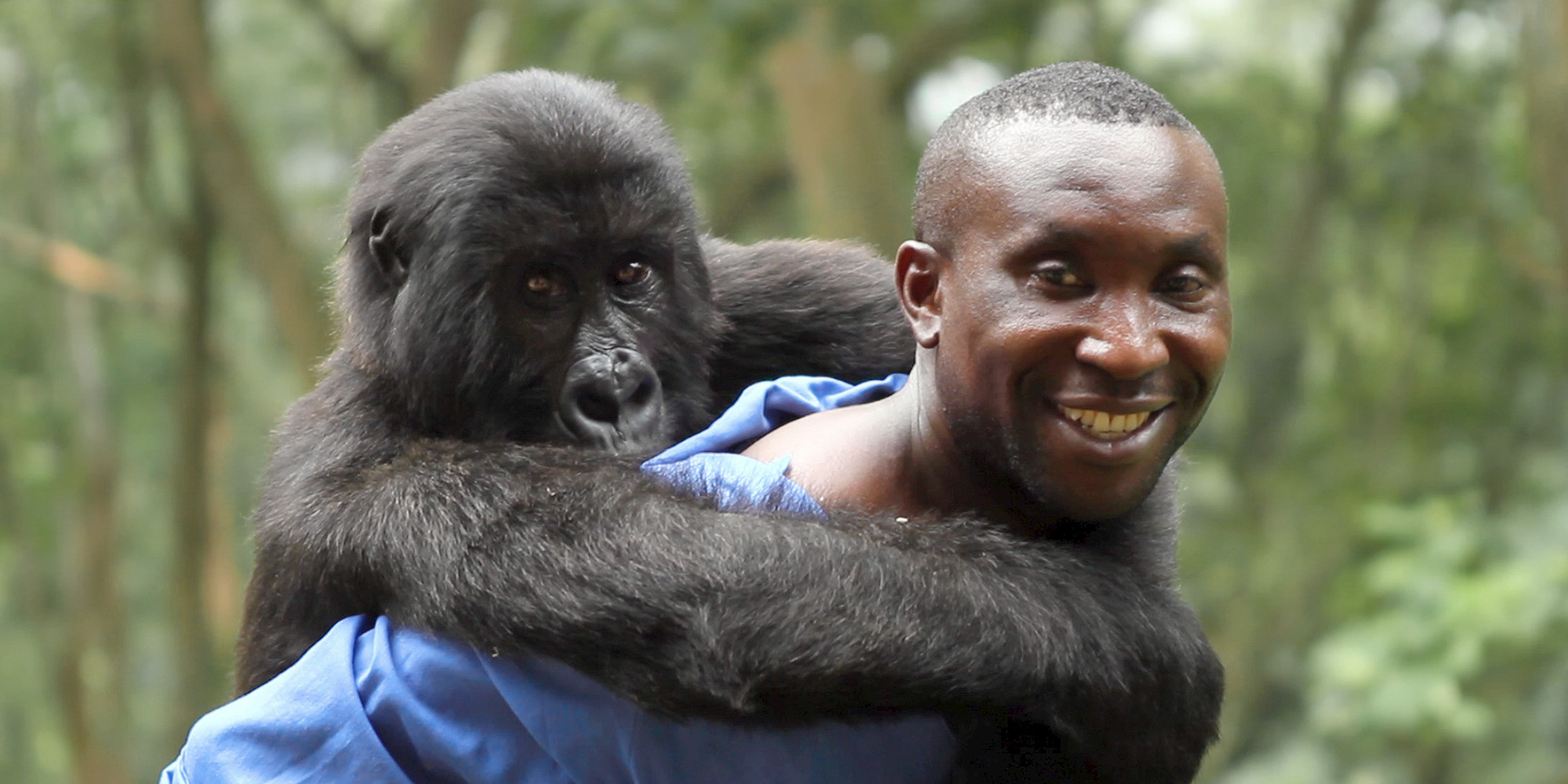
http://i.huffpost.com/gen/2253136/images/o-VIRUNGA12352-facebook.jpg
For our movie night attempted to watch Virunga on Netflix which did not work but after a brief period of time we got to watch a similar documentary on YouTube about the Virunga National Park located in the Democratic Republic of the Congo. I recommend watching the full documentary on Netflix. It is a moving and inspiring documentary that had been nominated for an Academy Award. Here's a trailer that will leave you dying to watch this film:

Meeting Minutes 10/13/15


The focus of our meeting this Tuesday was Bronson Curry's bat research in the eastern U.S.

But first, there will be two, yes two, trips to Page Wildlife Center this weekend. The trip on Saturday will roughly be from 1 - 3 and on Sunday from 12 - 2. If you plan on going, then be prepared to leave a half hour early. This might be one of the last trips so if you don't want to miss out, contact our co-Vice President Chris at cjherold @syr.edu.

In other news, Deer Aging Workshops will be held on Nov. 3rd, 4th and 5th from  6 - 8 p.m. Professor Joe Folta, visiting instructor Brian Underwood and his graduate student, Paul Picciano will be teaching these classes and hope to recruit some help in the Deer Check Stations at Montezuma Wildlife Refuge. So if you do sign up for these classes, you will be required to sign up for two slots at the deer check station. This would be great experience to put on your resume so I encourage you all to think about it. We have not yet made sign-ups but they will be made available to you when we have all the information on this event.

Now for the presentation:
Bronson Curry is a graduate student working in Dr. Shannon Farrell's lab and this summer, he did research on Fire Island to detect species presence and habitat selection of bats. Before that Bronson has done numerous studies of bats along the east coast.
Bronson used to study language at NC State University when he began to work at the NC museum doing some bat research for a few years. Then he volunteered with the North Carolina Bat Working Group. The work he did with this group as well as a bat Bioblitz he participated in led him to meet with professionals that convinced him this was the field he wanted to work in. (Hint: Connections are Important!)
Bronson's presentation focused on the importance of bats, which are a huge keystone species. 20% of all mammal species are bats and they are widespread. They consume a number of pest species ($3 billion worth of pest control) and pollinators for multiple plants,including the tequila plant. Recently, White Nose Syndrome (WNS) has killed 5.7 bats in 10 years. 27 states and about 5 Canadian territories have documented cases of WNS and the numbers are only growing. That's why bat research has never been more important and there is a lot of work to be done, especially in the lab, where the most recent notable work has been conducted. There's also the issue of wind farms which kill bats that fly into the pressure vortex created by the blades. A lot of wind farms now hire biologists to walk around and study the bats that are killed incidentally. 
The bat research Bronson is a part of, involves the use of transmitters, mist netting, acoustic recording and picking bats off of cave walls to assess their age, sex, and health. One of the benefits to bat research is being able to handle the study species directly. Vegetation sampling was also done because as it turns out, many bat species roost in trees. The objective of the study was to determine roosting conditions and the researchers found that telephone poles and houses were being used as roosts. This is why, Bronson believes artificial roosts that can be easily decontaminated would be the best control method for WNS.
If you want to learn more on the subject, look up whitenosesyndrome.org, batcon.org, and http://sfarrellesf.weebly.com/. If you're interested in doing some undergraduate work in Dr. Farrell's lab, it'd be best to contact about potential positions next semester.

Meeting Minutes 9/29/15

Tonight's meeting was a lot of laughs with Cohen's great presentation!

However, to start the meeting off, we talked about trips we've taken since the last meeting; PA Elk Trip and Duck Banding at Montezuma. Pictures of both are on our Instagram and the FB page. Then we talked about possible trips:
  • Page Wildlife Rehab is this Friday at 1 p.m. but this trip is now FULL!
  • We are planning for a trip to Wolf Mountain Nature Center on either 10/18 or 10/25. Both are Sundays and it will be a day trip. 
  • Saw Whet Owl Banding is in the works but be aware it will be LATE NOTICE. We will be notified for this trip either the day of or the day before so look out for that e-mail.
  • We are planning to have a Deer Aging Workshop which will either be on a Sunday or Saturday. You will need to take this workshop in order to help out with our future Deer Track Station trip to Montezuma.
Next was Dr. Cohen's presentation. Here are some summarized Words of Wisdom he imparted on us:
  1. You can start out your educational career not knowing what to do and still find success.
  2. When looking into grad schools, find a program you're interested in and ask a professor in that department if there's availability.
  3. Also, when looking into grad schools, find an adviser with a lot of money. 
  4. Go to conferences and network because you can get hired by people who attend, either at that conference or later in life.
  5. As a post-doc, your entire salary is paid on grants but the idea is you have to keep those grants and probably ask for more. 
  6. You can't just jump into a permanent job; you'll have to start out as a seasonal technician most likely. The best path to a permanent job is through a state agency like DEC or through a federal agency. If you're aiming for a government job, you should take the civil service exam.
  7. If you want to make a lot of money out of grad school, stats as a minor would be a good idea.
Summary of Cohen's presentation, Stumbling Into Success:
Jonathan Cohen grew up in suburbia with the least outdoorsy family and started out by bird watching and watching Mutual of Omaha's Wild Kingdom. He went to Cornell and majored in natural resources because he wasn't quite sure what to do. He went through a few jobs after college, one at a nature center and the other setting up mist nets but he decided to get a Masters degree and applied to UCONN. For his Masters, he studied Greater Scaup for contaminants. He went to a conference in San Francisco to discuss this work and from this, was hired by a toxicologist. Under the toxicologist he studied lead exposure in Black-Capped Night Heron but later found that he didn't want to continue this work due to its more gory tasks. He then began to take an interest in wildlife conservation and decided to pursue a Ph.D. in fisheries and wildlife sciences at Virginia Tech studying piping plover reproduction and survival.  As a post-doc he continued this work and focused his studies on Red Knots. However, he eventually decided that he needed a more permanent job and to his surprise was hired after applying for a position at ESF. Dr. Cohen now works here teaching the capstone class for the Wildlife Science major and got to diversify his studies through the research he does with graduate students.

Meeting Minutes 9/15/15

It was a great first meeting with nearly fifty people in attendance! First we talked about TWS as a campus organization:
  • The ESF chapter is a part of the National Wildlife Society and as such, we work towards similar goals.
  • Our meetings will consist of either guest speakers who are currently working in the field or we'll do workshops like resume building and ways to enhance your college career.
  •  We will frequently take trips to get hands on experience and by doing so, assist professionals in their work. 
 Next we introduced our officers:


 Lastly, we talked about upcoming trips:
  • Pennsylvania Elk Trip
  • Page Wildlife Rehab Center
  • Duck Banding at Montezuma
  • Adirondack Ecological Center Trip
  • Saw-Whet Owl Banding 
Due to the fact that no one wants to miss out on the Elk Trip, dates are still TBA but please sign up for all possible dates. don't forget to become a member as well by filling out the membership form attached to your e-mail and paying the membership fee. Remember that becoming a member means you get dibs on any trips you sign up for! If you are not on our listserv and consequently did not get an e-mail, please contact me at jgalarre@syr.edu.


February 19th Meeting Minutes

TWS Meeting 02/19
We were very fortunate to have Ed Pugliese from the Onondaga County Sportsmen Federation and Women In Nature (WIN) to come speak to us about work done by those organizations. The Federation is a county-wide group that does a lot of work with legislation with hunting. 

The big event coming up with WIN is their Outdoor Skills Workshop. It's a full day event, the main goal is to introduce women to different outdoor activities. There will be a number of different workshops which gives people a great chance to observe and learn it for themselves. This year's Workshops are being hosted at 4/25 in Fayetteville-Manlius Rod and Gun Club.​ They are welcoming anyone who wants to volunteer, either for the Workshops, setting up, standing-by, taking down etc, or even just a regular volunteer for WIN. This is a great event and it is a lot of fun to participate in and WIN is just a great group to work with in general. I've attached some shots of workshops that happened last year.


Some other organization that Ed is affiliated with are Pheasants Forever and Ruffed Grouse Society in Syracuse. Those are also great organizations that would love to work with us. Anyone interested working or volunteering with those groups should check out their sites: http://www.federationofsportsmen.com/wp/ or contact Ed (email: pka@aol.com). He'd be happy to set you up with something related to your interests with any of the groups and works with your schedule. Be sure to title your email with something like [ESF Student....] or [Volunteering with...]

Shout out to the Ranger School peeps! Welcome to the meeting! We successfully skyped them in the meeting tonight.

Upcoming events
NYS State Meeting (02/26-02/27) Next weekend

Please email Thea (rtcooper@syr.edu) if you are signed up for the New York State meeting so she can organize rides accordingly.

Winter Weekend (2/27-3/1)
The Winter Weekend is right after the NYS Meeting, so transportation will leave immediately after that, and we will most likely arrive back on Sun (3/1). There is a lot going on up there, a midnight hike, hockey, curling, dog sledding etc. Other towns in the area are also hosting a number of other activities if you wish to explore. 

Bowhunter Certification (4/20, 4/22, 4/23)
​Joe Folta has once again graciously organization a Bowhunter Certification course. It is 3 nights from 5:45pm-9:00pm at the Pompey Rod and Gun Club. You will need to attend all 3 nights to get certified since a certain number of hours of instruction is required. It is open to the public, so sign up here: https://www.register-ed.com/events/view/59108asap. As of the moment of this email, 24/36 spots are open.

Deer Tackling (3/6 and/or 3/20)
Unfortunately we were unable to go down to PA last weekend because they were having some issue with setting and reaching traps, rocket launcher, and just bad weather in general. Right now we are tentatively rescheduling the trip to either 3/6 (the start of Spring Break) or 3/20. Watch out for this.

Beast Feast (4/4)
So happy to announce that the date for Beast Feast has been finalized at 4/3 (Fri) at 5pm in Nifkin Lounge. If you didn't know already, Beast Feast is our club's major fund raising opportunity where we serve game dinner and this year we will serve vegetarian options again.
 - WIN is a big help and are donating a lot of meat to us (we heard something about 5lbs of moose and possibly some geese tonight), but if you have any other game meat (moose, deer, squirrel, rabbit, FISH) you wish to donate we will take it!
 - We are also looking for people to cook the meat. If you bring a dish, you get free admission. Otherwise it will be $5 for a ticket in advance and $10 for a ticket at the door.
 - We are also looking for freezer space to store the meat, so please please contact us if you have some space to keep few pounds of frozen game in your freezer.
If you are interested in helping coordinate the feast, contact us, and it's also free admission for you as well. You can contact our president Thea (rtcooper@syr.edu) about anything.

And related to that:
T-shirt competition  
Please submit your designs to us soon! We want to order some new t-shirts and have them arrive in time to sell at Beast Feast. You can had them in person or emailing an electronic copy to us.

Our vice president, Russell is looking for volunteers to help visit sites to look for snowy owls, so if you have a car and binoculars, and enjoy looking for awesome birds, email him (rewinter@syr.edu).

February 5th Meeting Minutes

TWS Meeting 02/05

We had a fairly short meeting and announced some new updates with trips that are happening. 

Upcoming events

Gary Alt (02/12)
As a reminder, Gary Alt is speaking in Nifkin at 12:30 about Deer Management and at the Adaptive Peak seminar in Illick 5 at 4pm on Thur 2/12 about Wildlife biologist, 

Deer Tackling with PAGC (2/13-2/15)
Deer tackling is going to happen this weekend so if you have not signed up for it do so here: http://goo.gl/forms/cF32J9xFLe. Feel free to contact Mike with any questions (mdmenza@syr.edu).

Rosamond Gifford zoo visit (2/15)
The behind-the-zoo visit is happening next weekend so sign up here: http://goo.gl/forms/vF0zcEPa5C Feel free to email Mollie with any questions (manugent@syr.edu)

NYS State Meeting (02/26-02/27)
There is a location change with the NYS meeting and it's now held at Brewerton. It's still very close to Syracuse, so the club will drive back from the meeting the same night. Sign up here it you haven't already: http://goo.gl/forms/66X9AKuxZT for further details. The registration fee is $50 and form can be found here: http://sites.google.com/site/nystws2015  

Student Conclave (03/27-03/29)
The registration form is due by 2/15 and the registration is $100 ($25 will be sponsored with the club) so anyone interested and know they will definitely go send have a check of $75 for Thea asap. If you didn't get an email from Thea and still want to go, please email her for instructions (rtcooper@syr.edu). We can only bring 15 students, so first come first serve!
​
Trapping course (TDB)
There is talk about asking Ron Giegerich​ to teach a course about Trapping for Hunters, so if this is something that interests please sign up here: http://goo.gl/forms/O8ms6adEHU ​We hope to have at least 15 people for the course. 

If you have already signed up for trips during the meeting, you are all set.

T-shirt competition (2/28) 
Please submit your designs to us by the end of February. You can had them in person or emailing an electronic copy to us. 

As always, check out our website: http://twsatesf.blogspot.com/ and feel free to email any of the officer or our president Thea with any questions (rtcooper@syr.edu)

January 22nd Meeting Minutes

TWS Meeting 01/22
First of all a very big thank to Dr. Shannon Farrell, Joe Folta, Ray Gutteriez, Terra Rentz, and Dr. Mike Schummer for taking time out of their busy schedule to join us in our meeting. They had a lot of great tips and advice on jobs to serve with us.

Resume:
- it should be more than 1 page, and as long as necessary.
- add in any experience or skills that you can think of; something knowing a special skill, or how to operate a special piece of  equipment can give you that competitive edge. Listing a diverse set of skills (navigation, scuba diving, computer skills) helps a lot as well.
- the action vocabulary you use is also important; avoid words like 'assisted' or 'helped', if you did a survey, or used a machine, say you did/used it. Words that demonstrate qualities (I lead a group project, I dealt with high conflict situations...) can make you more desirable as well.
- Have a clean, readable layout. Be consist in style. Avoid extra fancy symbols and choose a simple font.

Cover letter:
- this is a space for you to fill in the gaps, say something about your interests, learning ability, what you hope to gain in a job. extracurricular activities you think are relevant...
- try not to just repeat what is on your resume

Email etiquette: (when you are contacting a potential or future employer)
- be formal and polite; don't be afraid to use their formal title (Dr. , Prof., Director...),
    Start email with: 'Dear Dr. _______'/ , End with: 'Sincerely, _________'. don't be too casual.
- add some compliments: I am very interested in your work on botcats, I really like this program ran by your office...
- add 'thank you for your time' to show that you respect their time
- always spell check, misspelling word looks really bad to an employer
- tell them that you will follow up with them in a week or two; your employer is a busy person and your email will probably get buried in the other thousands of emails and they can't find yours, so the follow up email will be a great reminder to them and way to contact you back.
- DO NOT go above your employer's head and contact their supervisor if they don't get back to you. That is really bad manners and you would have made a really bad impression of yourself.
- contact the hiring officer to for any details about the position that are unclear to you
- if you are emailing about potential open positions, don't be afraid to attach your resume. The employer can then look at it to see if you can fit into any position they might have or direct you elsewhere where you would be a better fit.

Desirable skills:
- most of the time you won't possess every single skill an employer wants, that's OK.
- emphasize on skills/qualities that can't be taught quickly; leadership, problem solving, communication... Technical skills can always be taught.
- try and link skills that you possess to what they are looking for; it might be be the same but having something close or related is better than have nothing.
- browse job websites that see what are some common skills that employer always want (GPS, compass, GIS, hiking...) and use your time in college/clubs to get them.

Other comments:
- always do your research; either to show that you know what research a professor is doing or the nature of the organization you're applying to
- don't decide what is important to your employer myself; there are always transferable skills/experience from a non-field related job (waiter, baby sitter...) that the employer might think is useful
- show that you are willing to do what others aren't; traveling long distances, working in remote locations...
- have good references; people who can read a good paragraph about you, your work ethic, personality, skills. Try to branch out from faculty members.
- cast a wide net when applying for jobs, geographically and title wise; apply to jobs all over the country, don't cut out jobs working with plants or insects, these still give you valuable experience and maybe even a good reference.

Job searching:
Some websites to look into -
- Federal jobs-  http://www.USAJobs.gov
    - search '0404' code for biological technician jobs
    - use language/vocabulary the hiring post use when writing application. Don't just copy and paste
    - don't be afraid to call the hiring officer if your application goes through. Let them place a voice/face to your resume.
- NYS jobs - http://www.dec.ny.gov/about/jobs.html
- Higher education jobs - https://chroniclevitae.com/job_search/new —
- Texas A&M job board (aka wildlife job goldmine) -  http://wfscjobs.tamu.edu/job-board/
- The Wildlife Society - http://careers.wildlife.org/jobseeker/search/results/
- Ecological Society of America - http://www.esa.org/esa/careers-and-certification/job-board/
- ESF has Green Link - http://www.esf.edu/career/greenlink.htm
Organizations: WWF, Ducks Unlimited, Audubon Society, SCA... go to their websites and look for jobs/hiring pages

Upcoming events
Insomnic event (1/23 tonight 10pm)
Co-hosted with the Birding Club. There will be cookie, games, and Happy Feet! Come check it out. 10pm at Nifkon lounge tonight!

Gary Alt (02/12)
Gary Alt is a bear researcher and he will be speaking at an Adaptive Peak seminar on Thur 2/12 in Illick 5 at 4pm.

Ranger School winter weekend (02/27 - 02/29)
We are going to try and involve the ranger school more in our club this year. The ranger school is having an awesome winter weekend where you can do fun winter activities like curling and snowball and other fun stuff. Sign up here for more info later on: http://goo.gl/forms/LrkJ7NJKxZ We also want to see if we can plan a possible snowtracking/telemetry weekend later up there as well.

Deer Tackling with PAGC (Mid Feb-Early March)
We are planning a trip down to the PA Game Commission do deer tackling which basically means you dress up in heavy gear, get in a trap and tackle  the deer inside and help with tagging. It will be a weekend trip that will be lots of fun and lots of physical work, but also tackling deer. We are considering 2 possible weekends so sign up on all possible weekends that you're free: http://goo.gl/forms/cF32J9xFLe. Feel free to contact Mike with any questions (mdmenza@syr.edu).

Beast Feast (03/21)
Beast Feast is our giant annual fundraiser event. It's lots of fun. There will be a potluck with game meat dishes, raffles, and silent auctions. It's free entry if you bring a dish so here's a chance for you to show off your culinary skills! More info and arrangement coming later.

Turtle Survey (date TBA)
As you might recall we mentioned a multi-state wide turtle survey last year. There still isn't a lot of details out at this moment but this will involve doing counts along transects for the endangered turtle species. Please sign up in the link below and if you are interested in leading/designing the survey, please say so in the survey: http://goo.gl/forms/U0yYS5SynR and Thea can put you in contact with the DEC officer in charge of this. Feel free to email her with any questions (rtcooper@syr.edu).

Rosamond Gifford zoo visit (date TBA in Feb or March)
There will be a possible behind-the-scenes zoo visit at the Rosamond Gifford zoo sometime. You'll get a chance to see how the zoo works and various exhibit animals. Details are still being worked out at this point so keep an eye out.

(Many) Conferences
NYS State Meeting (02/26-02/27)
the New York State meeting will be at Gateway this year, so no travel cost! Everyone should go if they can. It is a great opportunity to connect, listen to talks, and just be immersed in a professional environment. Sign up here for more info coming later: http://goo.gl/forms/66X9AKuxZT.

Student Conclave (03/27-03/29)
Conclave will be at Paul Smiths this year, which is very close to us. It's a meeting between student clubs and a great choice to talk to peers in our field. There will be workshops, talks, a Quiz Bowl, and competition. Sign up here for more info: http://goo.gl/forms/xKVWH5Xxyr

If you have already signed up for trips during the meeting, you are all set.

T-shirt competition
We are also most out of club T-shirt (M and L sizes left!) so there will be a T-shirt design competition. Show of your design and art skills and submit your design for the club shirt on a A4/letter sizes document with 1 front design and 1 back design and send it to us. The winner will win a free T-shirt.

Feel free to email any of the officer or our president Thea with any questions (rtcooper@syr.edu)